Sometimes the best ideas come from unexpected places. A few years ago, a client asked me to build something simple: a tool to track project expenses against a budget. Nothing fancy—just “we have €5,000 for business expenses, where did it go?”
I built it, shipped it, and moved on. But that simple concept stuck with me.
Table of contents
Open Table of contents
The Problem With Budgeting
Let’s be honest—budgeting apps are overwhelming.
If you’re new to managing money, most tools throw charts, graphs, automated categorization, investment tracking, and a dozen other features at you before you’ve even entered your first expense. It’s like trying to learn piano by sitting down at a full orchestra.
What if you just want to know: “I have €500 for groceries this month. How much have I spent?”
That’s where the envelope method comes in. It’s old-school, simple, and it works:
- You have envelopes (categories) for different spending areas
- You put money in each envelope at the start of the month
- You track what comes out
- When an envelope is empty, you stop spending in that category
Simple. Tangible. Effective.
The problem? Most digital tools either skip this methodology entirely or bury it under complexity.
Enter Project Banana 🍌
I took that old client idea—tracking expenses against specific budgets—and rebuilt it for individuals. Not project managers tracking business spend, but people who just want to get a handle on their money without a finance degree.
The core philosophy:
- Fast expense entry - Add a transaction in seconds, not minutes
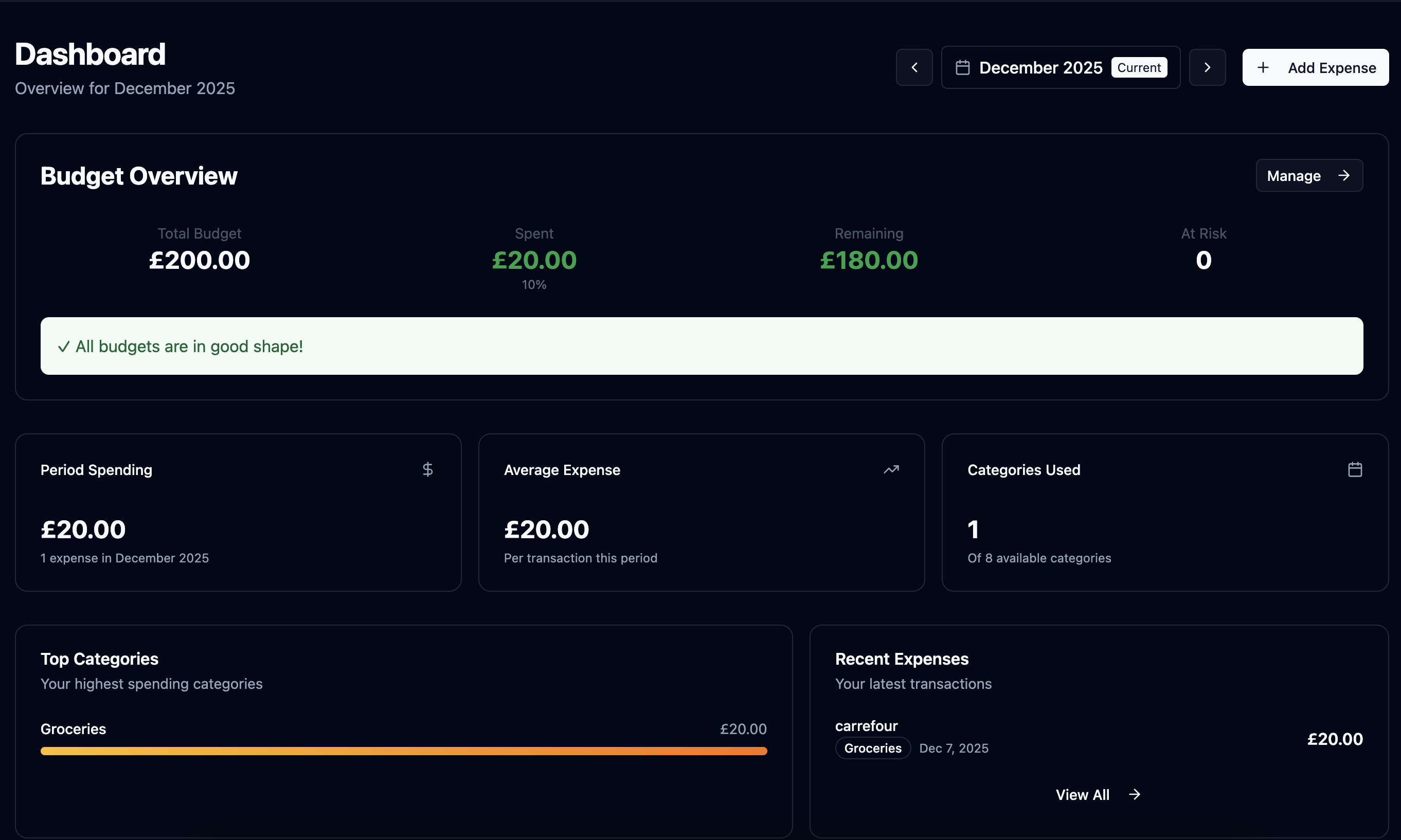
- Visual clarity - See your budget envelopes and remaining balances at a glance
- No complexity overhead - You get envelope budgeting. That’s it. And it’s enough.
The dashboard shows your budget envelopes and spending at a glance
How It Works
- Create your envelopes - Groceries, Rent, Entertainment, whatever categories make sense for you
- Set your budgets - Allocate money to each envelope for the month
- Track expenses - Quick entry when you spend
- Watch your progress - The dashboard shows you where you stand in real-time
No manual categorization. No AI trying to guess what your transactions mean. No linking your bank account (unless you want to—but that’s optional).
Just you, your budget, and clarity.
A note on accessibility: The app interface is currently English-only, but you can select your preferred currency in the settings—whether you budget in USD, EUR, GBP, or any other currency. Multilingual support is on the roadmap!
Building It Right
I wanted this to be fast and reliable, so I kept the stack focused:
- Backend: Go - Rock-solid performance, handles concurrency beautifully, deploys anywhere
- Frontend: SvelteKit - Reactive, fast, and a joy to build with
- Infrastructure: Designed for scale from day one (more on this in a future post!)
Adding an expense takes seconds, not a workflow
The goal was to make expense entry so fast you actually do it. No friction, no “I’ll add it later” (and then forget). Just tap, type, done.
Who It’s For
Project Banana is built for people who are new to budgeting or tired of over-complicated tools.
If you’ve tried budgeting apps before and bounced off because they felt like learning a new job, this is for you.
If you just want to try the envelope method without fighting software, this is for you.
If you want to see where your money goes without connecting every financial account you’ve ever had, this is definitely for you.
Try It Now
Project Banana is live and available today. We’re launching with a freemium tier so you can try it out risk-free.
👉 Sign up at project-banana.app
Got questions? Ideas? Just want to say hi? Reach me at [email protected] - I read and respond to every message.
What’s Next
This is version 1—the MVP. It does envelope budgeting well, and that’s intentional.
But there’s more coming:
- Mobile apps (iOS & Android) - Budget on the go
- Recurring expenses - Auto-allocate for regular bills
- Reports & insights - Understand your spending patterns over time
- Shared envelopes - Budgeting with a partner or household
I’ll be shipping updates regularly and sharing the journey here. If you have ideas or feedback, I want to hear them.
The Bottom Line
I built Project Banana because budgeting shouldn’t feel like a chore. It should feel empowering.
The envelope method works. It’s been working for decades. It just needed a modern, fast, beautiful interface that respects your time.
If you’ve been putting off budgeting because the tools felt overwhelming, give this a shot. It might just stick.
🍌 Try Project Banana | 📧 [email protected]
Let’s make budgeting simple again.